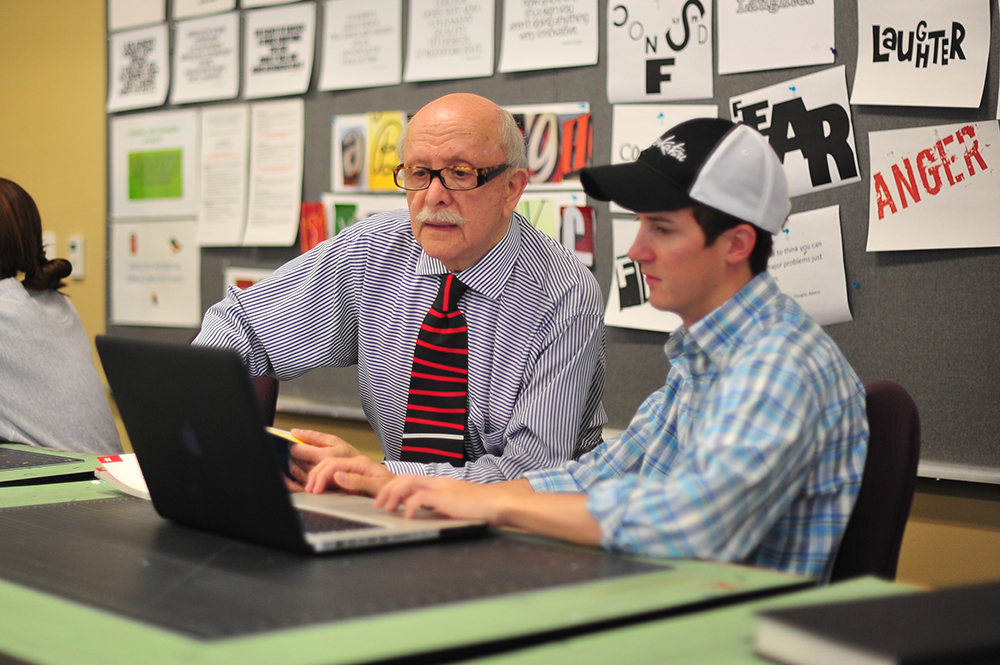
Chances are you’ve seen an advertisement or a piece of artwork created by Beaver whether you’ve realized it or not. Before mentoring graphic design students at HPU, he developed the kind of career in advertising and design that is reminiscent to “Mad Men,” though he’ll tell you that the show only gets part of the period right. He worked in lower Manhattan for major advertising firms and created campaigns that introduced many household name items including Subaru, Matchbox Toy Cars and even color underwear for Jockey. He collaborated with renowned artists such as Andy Warhol, eventually became a partner at a major advertising firm and earned the title of “Top 100 Creative People in the United States.” Today, he shares those experiences and his unique design skills with art and graphic design majors.
In 1995 I founded Creative Consultancy, Beaver Reitzfield. In 1997 I was inducted into The New York Art Directors Club Hall Of Fame. I was honored to be among some of the most distinguished names in the creative universe.
What is one of the most memorable or rewarding campaigns you worked on?
Actually there are three campaigns that stand out:
- Subaru became our largest account. We basically introduced the car into the U.S. market with a campaign strategy that stressed its economy and four wheel drive capability (unique at the time). Subaru allowed us to create award-winning work.
- Matchbox Toy Cars won many creative awards as we shifted the advertising toward parents rather than kids. Who buys the toys anyway?
- Jockey Underwear asked us to introduce the industry’s first line of color underwear. We produced television commercials with the famous Yankee baseball icon Yogi Berra and his three sons. They argued over the benefits of white versus color. Yogi was great to work with and the TV spot received several advertising awards.
AMC’s “Mad Men” series, now in its sixth season, has brought to life the high-pressure world of advertising during the industry’s “Golden Age.” Do they get it right?
I’d say they get about 25 percent of it right. Sure, there were 3-hour martini lunches for some, but the series pushes the script for entertainment effect. The reality of the series is presented in the pressure and competitive nature of the advertising business. The “Golden Age” for me began in the ‘60s with the creative revolution introduced by the agency Doyle Dane Bernbach. At that time they made a commitment to the creative product, not the martini lunch.
What is your advice to those aspiring to be creative leaders of the world?
A creative leader needs to develop a unique perspective and vision within the global community where we live. This is only achieved with a strong commitment to one’s art, hard work and an unyielding devotion to great work.