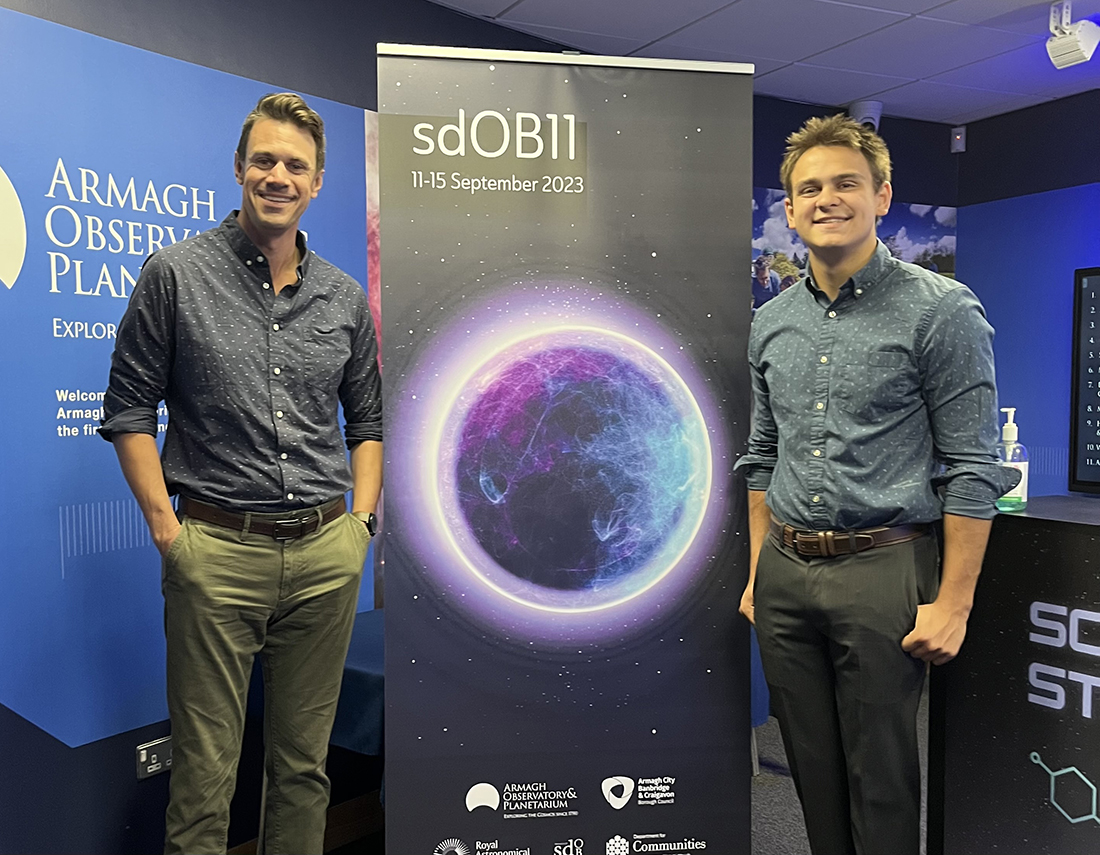
From left, Dr. Brad Barlow, associate professor of astrophysics, and Bryce Smith, a senior physics and mathematics major, recently presented the results of their latest research projects in Northen Ireland at an astrophysics conference focused on evolved, compact stars.
HPU Survey Research Center Hosts National Conference.
HIGH POINT, N.C., Oct. 10, 2023 – Members of the High Point University community frequently conduct, publish and share research and creative works in a variety of ways. Below is a recap of recent research and innovation initiatives.
HPU Professor and Student Present Research at Astrophysics Conference
Dr. Brad Barlow, associate professor of astrophysics and director of HPU’s Culp Planetarium, and Bryce Smith, a senior physics and mathematics major, recently presented the results of their latest research projects in Northern Ireland at an astrophysics conference focused on evolved, compact stars.
This biennial conference, the 11th Meeting on Hot Subdwarf Stars and Related Objects, attracts astronomers from around the world for a week of oral presentations, poster presentations, brainstorming sessions and social activities.
Smith presented “EC 23257-5443: An Anomalous Reflection Effect Binary with Phase-Dependent Emission.” He discussed an exciting but mysterious new binary star system he and Barlow discovered last year using telescopes in Chile. Barlow gave a presentation titled “Surfing the (Sine) Waves: Fourier Analyses of Hot Subdwarf Binaries Observed with TESS,” in which he discussed his group’s work to discover and characterize new star systems using data from NASA’s TESS spacecraft.
“Most of the people presenting research at the subdwarf observed binaries meetings are professors who have been doing research in the field for decades,” said Barlow. “As such, it can be intimidating for undergraduates to present there. Bryce gave a fantastic presentation with clarity and confidence not often seen in students. I am incredibly proud of the work he has done and the quality of his presentation.”
Barlow has been chosen to host the 12th Meeting on Hot Subdwarfs and Related Objects in North Carolina in 2025.
In addition, Barlow recently presented research at the Hvar Stellar Meeting in Croatia. This invitation-only, international conference in astrophysics brought together dozens of astronomers and astrophysicists from around the world. Together, the participants represented some of the world’s leaders in stellar astrophysics – the branch of astronomy focused on the structure and evolution of stars.
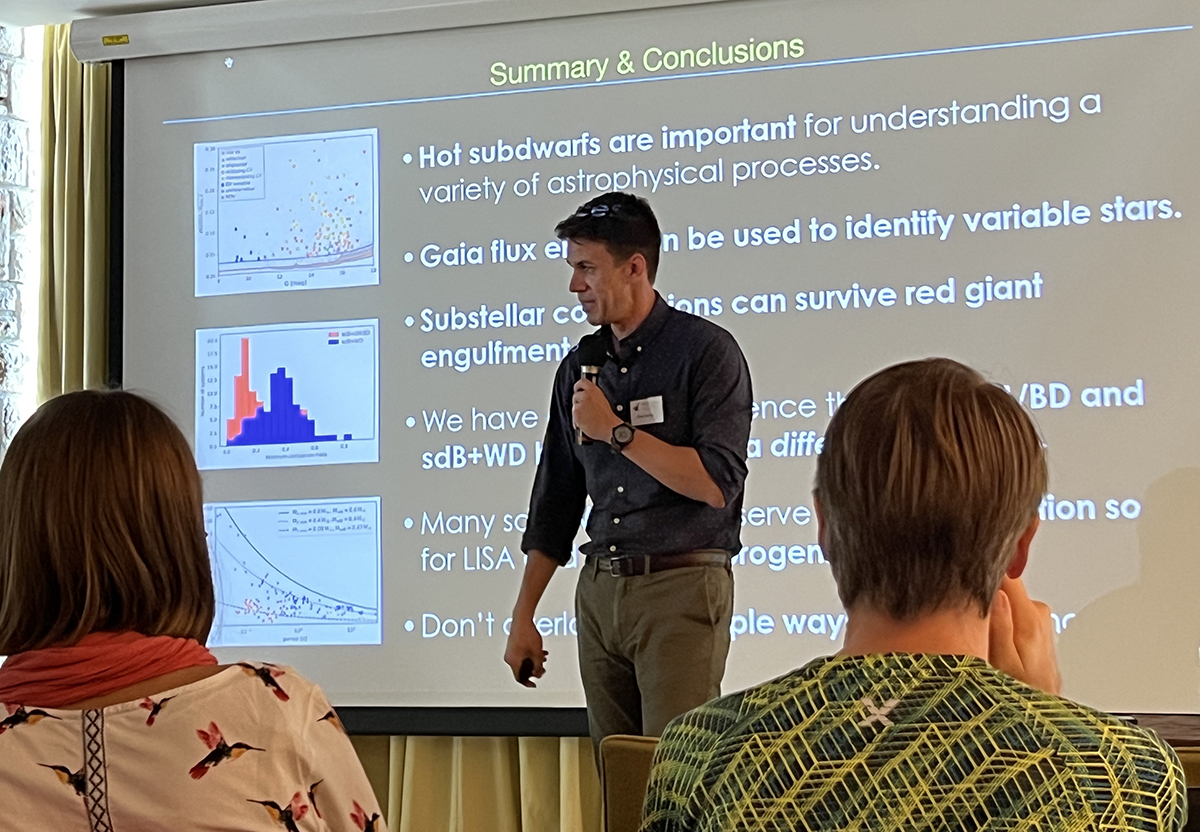
“When I received the invitation to present our group’s research at the Hvar Stellar Meeting, I was beyond honored,” said Barlow. “Hvar Observatory is a well-known facility within my subfield of astronomy, and I was thrilled to have the chance to visit. I probably learned more about advanced stellar astrophysics in those five days than I have in the past five years.”
Barlow presented “Fundamental Properties of Binary Hot Subluminous O/B Stars Observed from Space,” in which he discussed how his HPU research group uses data from orbiting spacecraft to understand how stars evolve when in close binary systems. Several HPU undergraduates have contributed to this work over the past decade.
Astrophysics Professor and Collaborators Discover New Star Systems
Barlow, along with an international team of astronomers, used several of the world’s largest telescopes to discover a rare white dwarf star system called WDJ 022558.21-692025.38. Their discovery was recently announced in an article titled “An Eclipsing 47-minute Double White Dwarf Binary at 400 pc,” published in Monthly Notices of the Royal Astronomical Society, one of the world’s leading astrophysics journals.
WDJ 022558.21-692025.38 consists of two white dwarfs – the Earth-sized remnants of dead stars – that orbit one another every 47 minutes at speeds of approximately 200 miles per second (720,000 mph).
“Normally in astrophysics, we deal with objects that change very slowly – over the course of millions or billions of years,” said Barlow. “It’s exciting to study an object that measurably changes over a timescale of just minutes. If you were in a spaceship parked near these two stars, you could watch them move in real-time.”
The two stars orbit so quickly they create “ripples” in the fabric of spacetime called gravitational waves that propagate through the universe. As the stars lose energy due to the emission of gravitational waves, they slowly spiral inward toward one another and will eventually merge to create a single white dwarf star. Detailed studies of systems like WDJ 022558.21-692025.38 can help scientists test predictions of Albert Einstein’s theory of relativity and understand more clearly how stars interact in binary systems.
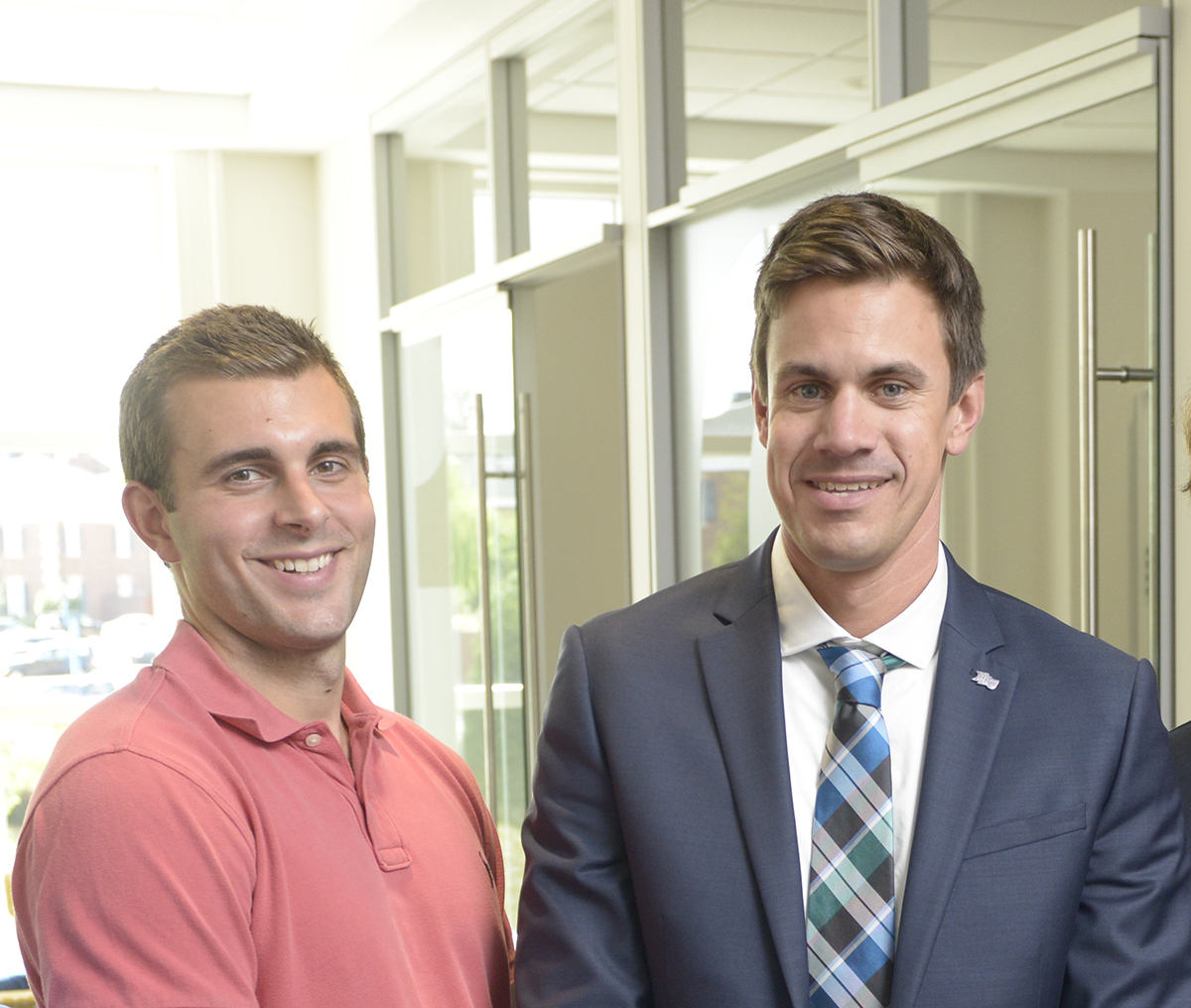
The project was a collaborative effort between 23 scientists in eight different countries, including the U.S., United Kingdom, Spain, Ireland, Brazil, Poland, Israel and South Africa. Barlow said the most fulfilling part of this project for him was collaborating with Dr. Ryan Hegedus, ‘17, his former HPU student and undergraduate research group member. Hegedus successfully defended his PhD last year at the University of North Carolina at Chapel Hill.
HPU Survey Research Center Hosts Conference
HPU’s Survey Research Center (SRC) hosted the annual Association of Academic Survey Research Organizations (AASRO) member conference from Sept. 28-30. This was the first year HPU hosted the event, incorporating a virtual component for the first time at an in-person conference.
“Hosting this conference allowed the SRC to engage personnel in charge of events as well as catering, campus enhancement and transportation,” said Brian McDonald, associate director of the SRC and president of AASRO. “It also gave our student research assistants exposure to conference logistics and a deeper insight to survey research. The conference was a success because of everyone who was involved.”
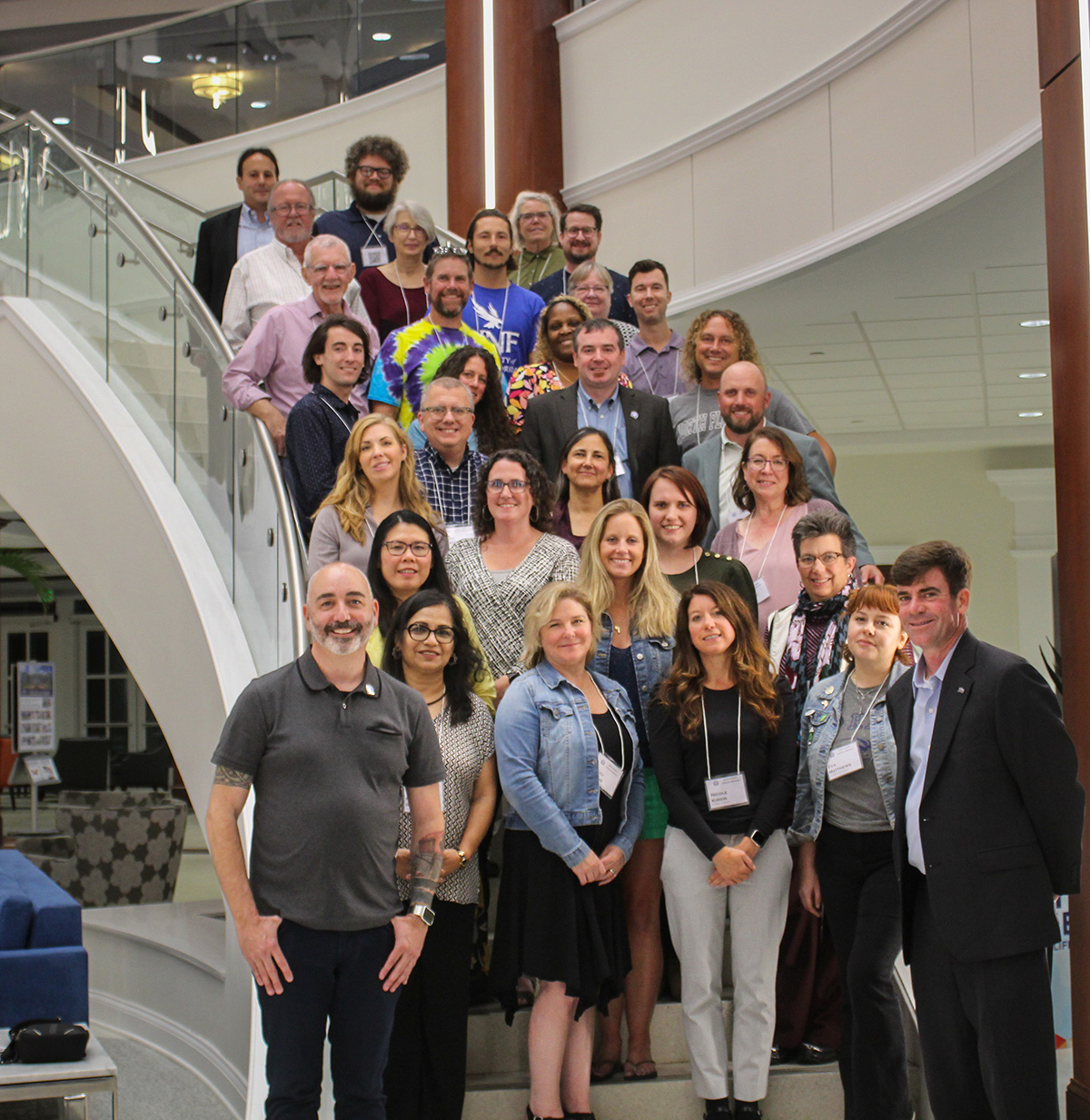
AASRO members, center directors and assistant directors can attend the conference. This year, HPU hosted 32 members from 22 academic survey centers from across the United States. Several institutions, such as the University of North Florida, East Carolina University, University of New Hampshire, the University of Michigan and Stetson University, served as conference panel members or session moderators.
“The AASRO conference was a great learning experience for me,” said Will Anderson, graduate research assistant in the SRC and a current master’s student in communication and business leadership. “I’m grateful for the opportunity to hear from other universities’ survey centers and to help with AASRO. I gained excellent conference experience and further developed my knowledge of our own survey center here at HPU.”
Several themes were discussed at this year’s conference. One session, titled Engaging the Community, highlighted the collaborations with the HPU Pro Bono Physical Therapy Clinic and the Greater High Point Food Alliance. Other conference sessions focused on interviewer training, mixed-methods survey modes, survey incentives and recruitment and retention of center staff.